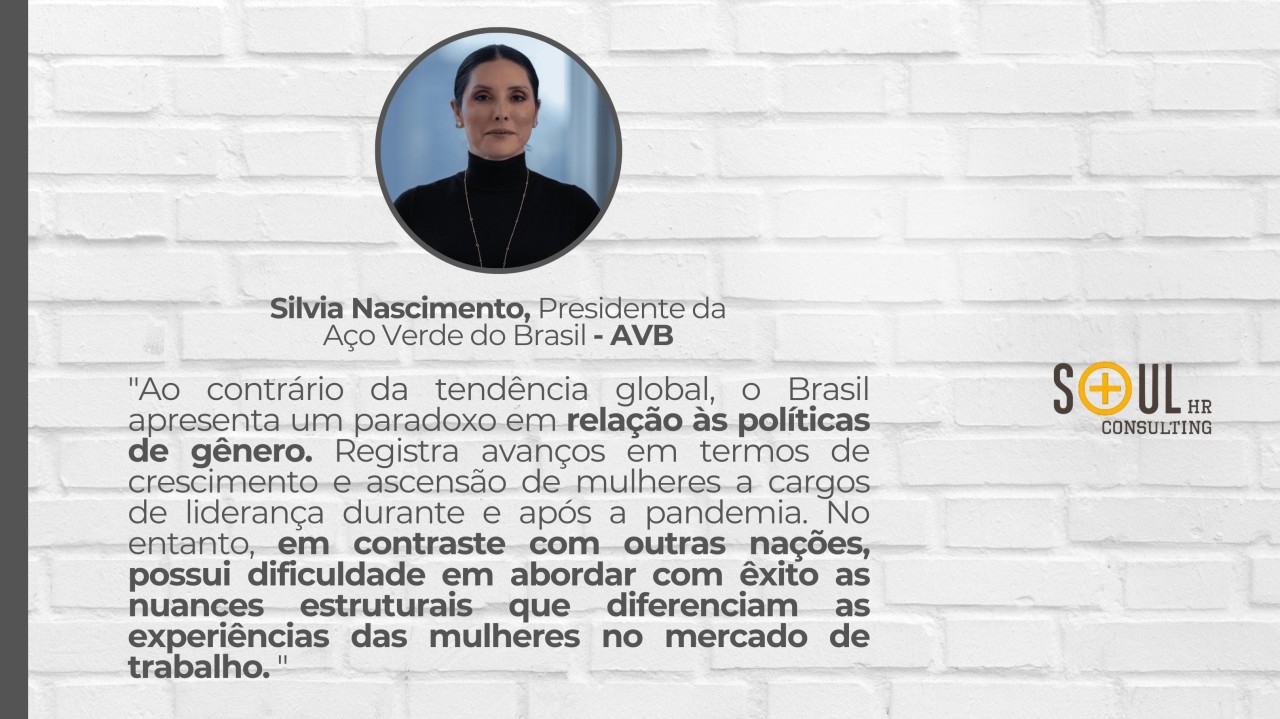
By: Silvia Nascimento, President of AVB - Aço Verde do Brasil
Some years have passed since the presence of women in companies came onto the agenda. Those who have followed the social and corporate governance changes recognize that one of the most significant decisions for the healthy development of companies was gender inclusion.
Even so, Brazil still needs to tackle structural challenges to keep women active in the market, especially those who go through motherhood, a situation that shows us that, despite the advance of women in management positions, progress in this regard has not been uniform for all of them.
Many still face old difficulties. These are issues that were neglected, turning inclusion 2.0 into an ambiguous phenomenon that goes beyond the quantitative analysis of statistics. In this scenario, it is imperative to re-examine the structural barriers, which have not yet been fully overcome.
Undeniably, we are witnessing an upward movement in the number of women in leadership and management positions. The Panorama Mulheres 2023 study points to an important advance: women's share of the top executive position in Brazilian companies rose from 13% to 17% between 2019 and 2022. In addition, women already hold 21% of seats on boards of directors.
These figures become even more relevant when we consider that the period analyzed included the Covid-19 pandemic. While Brazil showed resilience and progress on the gender equity agenda in the corporate environment, other countries advanced more slowly. The Women in the Workplace 2024 report, by Lean In in partnership with McKinsey & Company, shows that in the United States the road to parity is still long: it is estimated that white women will only reach balance in leadership positions in about 22 years — and Black and Latina women in more than 50.
Contrary to the global trend, Brazil presents a paradox when it comes to gender policies. It has recorded advances in the growth and rise of women to leadership positions during and after the pandemic. However, in contrast to other nations, it struggles to successfully address the structural nuances that differentiate women's experiences in the job market. Especially at this moment, when we are seeing countries and companies pull back from equity and diversity initiatives.
These differences are most evident in motherhood. For 24 years, I have witnessed the loss of female talent who, on becoming mothers, often do not return to work. According to data from the portal Empregos.com.br, 56% of women are dismissed after maternity leave. The same survey found that, of the 388 small and medium-sized companies interviewed, only 7% offer a baby-changing room and a playroom, while 93% have no kind of space dedicated to these needs.
To counter this scenario, I identified the need to implement concrete measures, such as offering childcare vouchers and financial assistance, and growth opportunities in different areas of the company, to mention just a few examples. The aim is to provide the fundamental structural conditions so that all women, as part of diverse teams made up of men, people with disabilities, young people and older individuals, among others, feel empowered to pursue professional growth.
That is why I believe companies mindful of future success understand that the path to prosperous operations is linked to encouraging the development of skills naturally recognized in women leaders, such as care, listening, effective communication, creativity, adaptability and collaboration. After all, these competencies strengthen teams, foster cooperation and build environments conducive to the growth of everyone involved.
By understanding and embracing this dynamic, we can say that we are truly in the 2.0 era of inclusion, characterized by strategic investments that go beyond simply expanding representation. The presence of women in equal leadership positions brings practical implications that positively impact overall business performance.
Enjoyed this content? Be sure to like and share!
Send us, in the comments or by direct message, other topics you would like to see here in our newsletter Agenda Executiva.