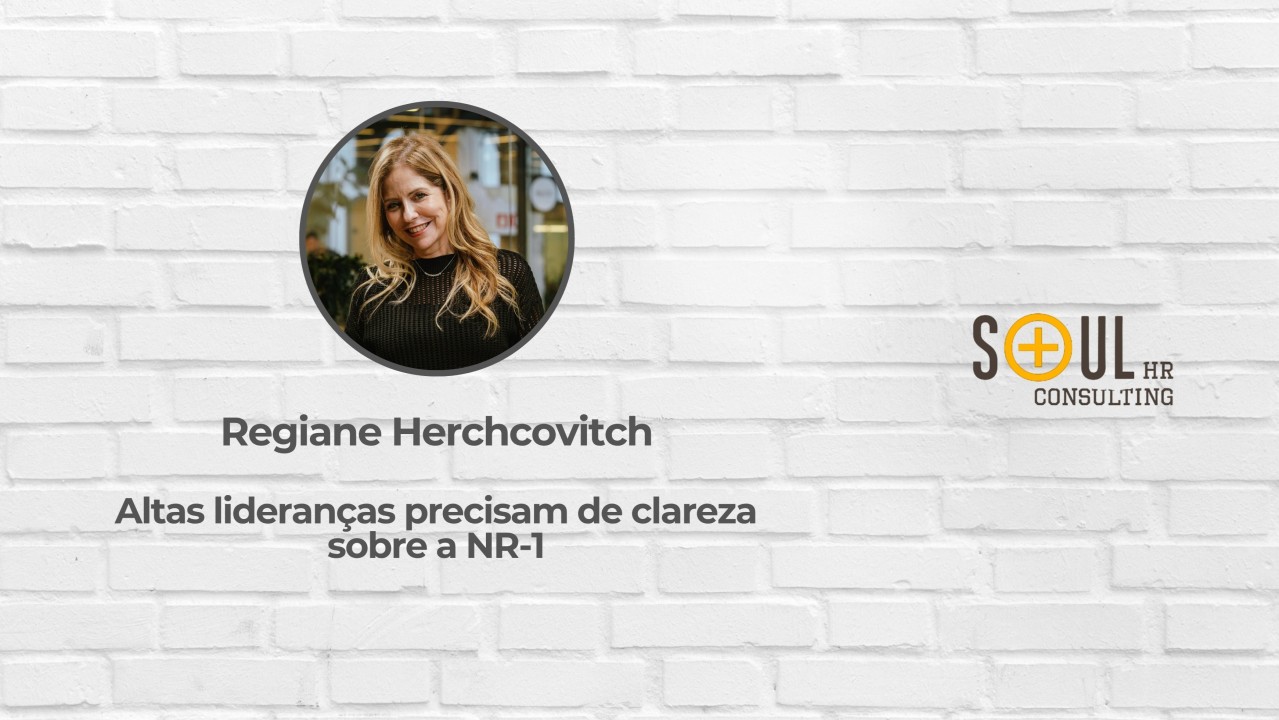
Brazil's Regulatory Standard 1 (NR-1) came fully into force this month, May 2026, requiring leaders to manage psychosocial risks such as excessive pressure and environments considered toxic in a structured way. Regiane Herchcovitch, partner at Soul HR Consulting and a specialist in Culture and leadership development, warns: “When we talk about NR-1, we are talking about the foundation of how companies organize and manage work”. For senior leaders, it is time to raise people management to a preventive and strategic level.
What changes for executives?
“The main recent change is precisely the clearer inclusion of so-called psychosocial risks”, explains Herchcovitch, citing excessive pressure, strained relationships and unprepared leadership. These factors, previously perceived informally, are now part of risk management, moving “out of the realm of perception and into the realm of management”. It affects all companies, but it requires awareness and structure from leaders to mitigate impacts on performance and retention.
Leaders who take the standard seriously will see “more clarity about what is expected, more respectful relationships, less disorganized overload and more openness to dialogue”, says the specialist. The work context, shaped by executive pace and decisions, stops blaming individuals: the question is no longer ‘can this person not cope?’ and becomes ‘what context are we creating here?’ The context either facilitates trust and fosters commitment or, on the contrary, drives people away and does not allow innovation.
“Psychosocial risks are the work factors that affect people psychologically and emotionally”, such as lack of autonomy and constant conflict, generating costs in engagement. Mental health is recognized as an occupational risk, with a focus on organizational causes: “It is not about turning the company into a clinical space, but about looking at the organizational causes” and at how to reduce risks that can even harm performance. Leaders must create environments that sustain balance, without ceasing to demand the best from each person, because human beings like to have that opportunity.
Strategic prevention and the role of leadership
NR-1 reinforces “a shift from a reactive view to a more preventive and structured one”, benefiting business results. Herchcovitch emphasizes shared responsibility: “Employees also have a leading role, being responsible in the first instance for managing their own physical, emotional and social balance, but the actions of leaders carry decisive weight”. For executives, May marks the beginning of intentional management that reduces risks and raises performance.