Agenda Executiva spoke with a leading researcher on gender equality in the corporate environment
Despite progress in several sectors, gender equity in the job market still faces significant challenges. Data from the World Economic Forum's Global Gender Gap show that it will still take us more than a hundred years to achieve gender equality in the world of work.
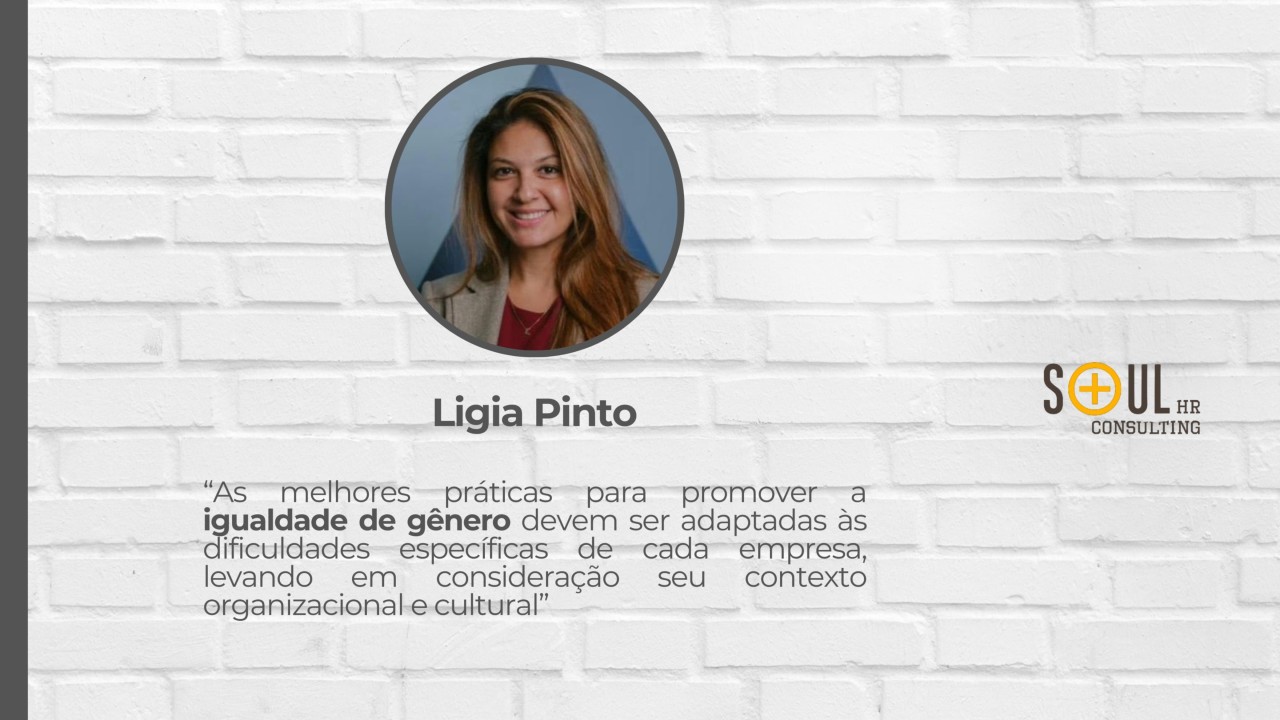
When it comes to best practices for inclusion, the truth is that there is no predefined rule, says Ligia Pinto, Vice President of Institutional/Government Relations and Communications at Sigma Lithium Corp. (Nasdaq:SGML), Senior Consultant, Researcher and Professor at Fundação Getulio Vargas and Director of Institutional Relations at Grupo Mulheres do Brasil (Stakeholders/Government), in an interview for the Soul HR Consulting newsletter.
According to the researcher, “the best practices for promoting gender equality must be adapted to each company's specific difficulties, taking into account its organizational and cultural context”, she points out.
In some sectors, “the presence of women is scarce from the entry level up, requiring strategies that encourage the hiring of women and not only initiatives aimed at career progression”, Ligia notes.
On the other hand, she explains that some organizations have a large number of female employees at operational levels but few women in leadership positions. “This calls for a deeper analysis of possible barriers that hinder women's advancement, especially in middle management.”
The mining sector, for example, is one of those with very few women in leadership positions. However, “some companies show notable progress, as is the case at Sigma, where 60% of leadership positions are held by women, and when we add management and superintendent levels, the figure reaches 74%”, Ligia reveals.
Another challenge is implementing international companies' gender equity policies in local subsidiaries. “Cultural differences can compromise the effectiveness of these initiatives, making it essential to adapt strategies to the reality of the country. One example is the difference in domestic support networks: in the United States, because domestic workers are uncommon, companies offer in-house daycare to make mothers' routines easier. In Brazil, on the other hand, the culture of domestic service is different, which can make such initiatives less impactful.”
Cases such as Magazine Luiza's "cheque-mãe" (mother's check), a childcare allowance of R$400 a month for employees with children up to 11 years old, show the importance of well-planned policies adapted to local reality.
One rises and lifts another!
Ligia highlights the importance of women in leadership positions for perpetuating this organizational culture. “When women are placed in these posts, it creates an effect of identification and encouragement, helping more women to be hired and promoted, replicating a pattern historically adopted by male leaders, which was to carry out a certain ‘maintenance’ of power”, explains the FGV researcher.
Data for good!
Asked how collecting and analyzing data on gender diversity within companies can really contribute to the agenda, Ligia says that a well-structured human resources diagnosis makes it possible to create tailored policies, considering not only gender but also ethnicity, social conditions and other factors. “Ready-made models can serve as a reference, but generic solutions are not usually effective without proper contextualization”.
Finally, she says that examples of poorly implemented initiatives include mentoring programs led exclusively by male leaders. “Although the presence of men as mentors may have its technical value, women's professional development experience can be more effective when led by other women, ensuring empathy and understanding of the difficulties faced”, she adds.
Enjoyed this content? Be sure to like and share!
Send us, in the comments or by direct message, other topics you would like to see here in our newsletter Agenda Executiva.