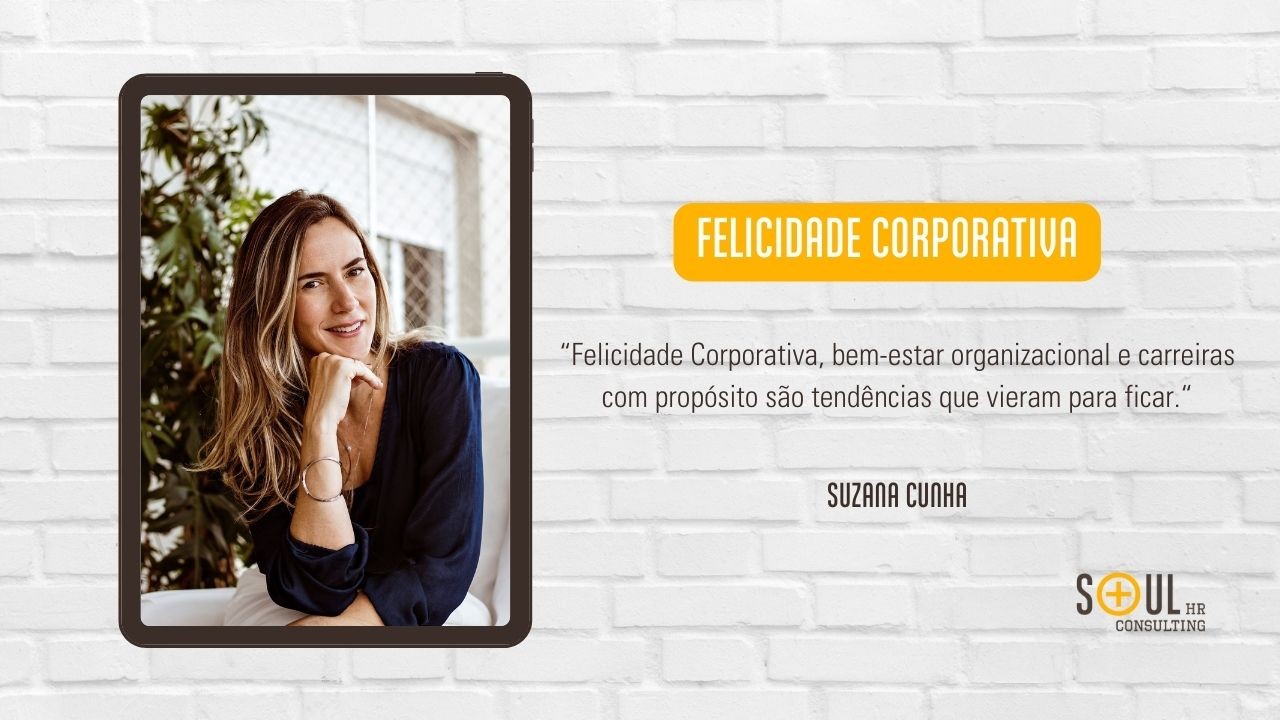
Suzana Cunha is a Neurocoach and Mentor specializing in Purposeful Careers, Humanized Leadership and the Science of Happiness. Founder of SPIREU – a Purposeful Career Platform, and Partner at Vinning – Corporate Happiness Consulting.
By: Suzana Cunha
The corporate world has undergone profound changes; the pandemic reinforced the interconnection between our personal and professional lives and forced organizations to adopt new operating models.
According to the World Health Organization (WHO), the main illnesses of the 21st century include loneliness, depression and anxiety, symptoms of a society in search of purpose, connection and belonging. Brazil, in fact, is considered the most anxious country in the world. For years, companies invested in training to teach their employees to be more productive, resilient and focused, but they did not teach them how to work with vulnerability or how best to support the teams they lead. Good or bad experiences with leaders have the power to last over time and affect people's lives, inside and outside the professional environment (after all, if there is one positive thing the pandemic brought us, it is the understanding that our life – personal and professional - is one and the same!).
- Only 23% of people are engaged at work, costing companies a staggering USD 8.8 trillion a year (Gallup).
- A striking 41% of organizations' employees are feeling burned out (Deloitte).
- 38% of Generation Z have already left a position that was not in line with their personal goals and aspirations. (Forbes)
Humanized leadership emerges as part of the culture of well-being – something non-negotiable for today's workforce – and can be understood as a positive way for leaders to impact the people on their team.
The union of these two aspects – humanized leadership and well-being – makes up what we now call Corporate Happiness. No, it is not just about a feeling of joy in the workplace, but above all about finding purpose, meaning and satisfaction in what you do every day, so that the routine truly becomes a means of personal and professional fulfillment. When companies invest in programs that prepare leaders for more humanized management and offer the means and resources for their employees to learn and practice the Science of Happiness, they are ultimately investing in more sustainable results for their business. Major clients have been devoting time and resources to this theme, such as Deloitte, Suzano, Google, HEINEKEN, Chilli Beans and many other companies.
From scientific studies and success stories at large companies, we know that developing a culture of well-being, reflected in the practices of Corporate Happiness and in the exercise of Humanized Leadership, requires awareness, discipline and consistency, and needs to be on the agenda of the organization's top leader. That is how organizations turn good practices into habits.
- A 31% increase in productivity (Harvard Business Review).
- A 37% increase in sales (Harvard).
- A 56% increase in job performance (Deloitte).
- A 50% reduction in turnover (Deloitte).
- A 75% reduction in sick days (Deloitte).
By investing in the well-being of their professionals, companies are making them more productive, because they are happier and more human in exercising their leadership. It has never been so necessary to discuss how these topics can positively impact the company's results and add value to the business. We have:
- A growing problem: illnesses related to mental health.
- The Science of Happiness, with data and facts, to guide a more humanized lifestyle and style of leadership.
- The unmistakable realization that we spend more time at work than with our family.
Therefore, practicing happiness and finding your purpose at work is URGENT!
According to the longest study on the Science of Happiness, conducted by Harvard, the factor that contributes most to long-term happiness is relationships of quality and trust. To build them, inside and outside the professional environment, we first need to know ourselves so that we can also get to know people beyond their professional profiles and, finally, connect in a genuine way. Besides developing “soft skills” and “hard skills”, the WHO and other international organizations, such as UNESCO and UNICEF, have played significant roles in promoting the need to develop a third category, “life skills” - the skills we use to improve our life as a whole.
According to Simon Sinek, "when people feel protected and safe, through the company's culture and its leaders, the natural reaction is to trust and cooperate. Leadership is a choice, not a title. There are leaders who have authority, but we would not follow them. There are people who have no authority but are natural leaders, simply because they decided to take care of people, and that is what a leader does."
Corporate Happiness, organizational well-being and purposeful careers are trends that are here to stay. For me, it is an honor to inspire so many professionals and help so many companies on their journeys of development, growth and cultural transformation. Finally, a reflection to leave you with:
What is the MARK you want to leave on people, as a company, leader and individual?
Interested in this subject?
Leave in the comments a topic you would like to see in our Agenda Executiva.